
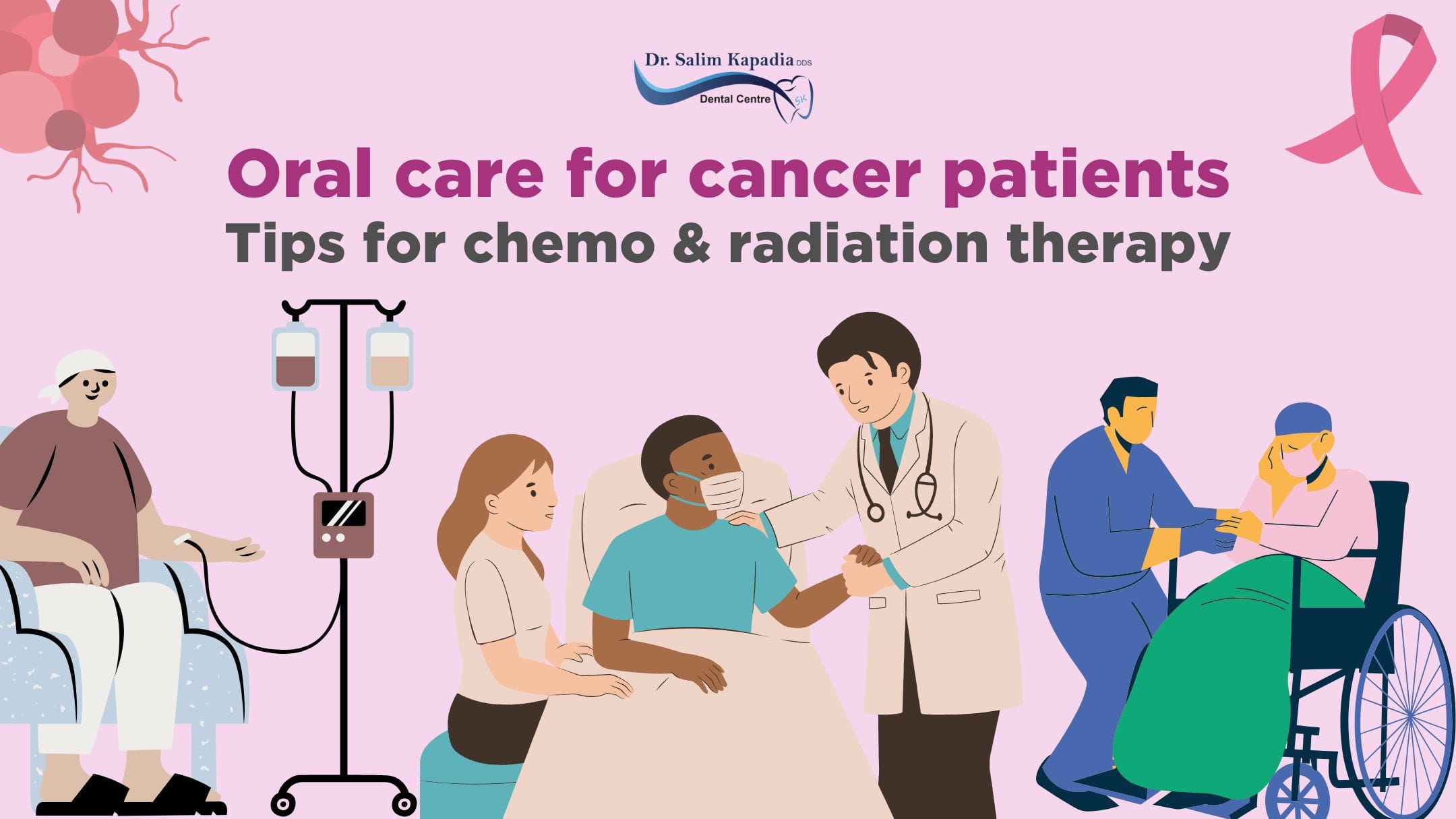
Cancer treatments save lives, but they can also create new challenges for your oral health. Chemotherapy and radiation therapy to the head and neck often affect the mouth, leading to dry mouth, mouth sores, gum irritation, infections, and even changes in taste. These side effects can make eating, speaking, and daily life more difficult. Taking steps to protect your mouth before, during, and after treatment can help reduce discomfort and improve quality of life.
Before treatment
A healthy mouth is more resilient during cancer therapy. Taking care of any issues in advance can make a big difference:
- Dental check-up and cleaning: A thorough exam helps identify and treat problems like cavities or gum disease before treatment begins.
- Address active issues: Teeth with decay, loose fillings, or gum infections are more likely to worsen under chemotherapy or radiation. Taking care of them ahead of time prevents complications later.
- Timing of procedures: Some dental treatments may need to be delayed or adjusted depending on your cancer therapy schedule. It’s best to discuss this with your dentist and oncologist together.
During treatment
Side effects in the mouth are common during chemotherapy and radiation, but good daily habits can help ease them:
- Gentle brushing and flossing: Use a soft-bristled toothbrush twice a day. Floss carefully if your gums allow it, but stop if you notice unusual bleeding.
- Soothing rinses: Rinse after meals with a mild saltwater or baking soda solution. This can calm tissues and keep the mouth clean.
- Stay hydrated: Sip water often to reduce dryness. Sugar-free gum or lozenges can also stimulate saliva.
- Choose foods wisely: Soft, mild foods are easier on sore tissues. Avoid spicy, acidic, or crunchy foods that can cause irritation.
- Watch for changes: Report mouth pain, persistent white patches, or infections to your oncologist and dentist right away.
After treatment
Even after cancer therapy ends, your mouth may continue to feel different for some time. Long-term care supports healing and comfort:
- Regular dental visits: Ongoing check-ups help monitor issues like dry mouth, increased cavities, or jawbone changes that can develop after treatment.
- Managing dry mouth: Your dentist may recommend saliva substitutes, gels, or special mouth rinses to relieve dryness and protect teeth.
- Nutrition for recovery: A diet rich in calcium, vitamins, and protein supports healing tissues and strengthens teeth and bones.
How we can support you
At Dr. Salim Kapadia Dental Centre in Scarborough, we understand that cancer treatment affects more than just the body – it touches every part of daily life. Our team works closely with patients undergoing therapy to provide safe, gentle dental care that respects your medical needs. We can communicate with your oncology team, recommend products to ease dry mouth and sensitivity, and adapt your care as your treatment progresses.
You don’t have to manage oral side effects alone. With the right support, you can protect your smile and focus your energy where it matters most – on recovery and well-being.