
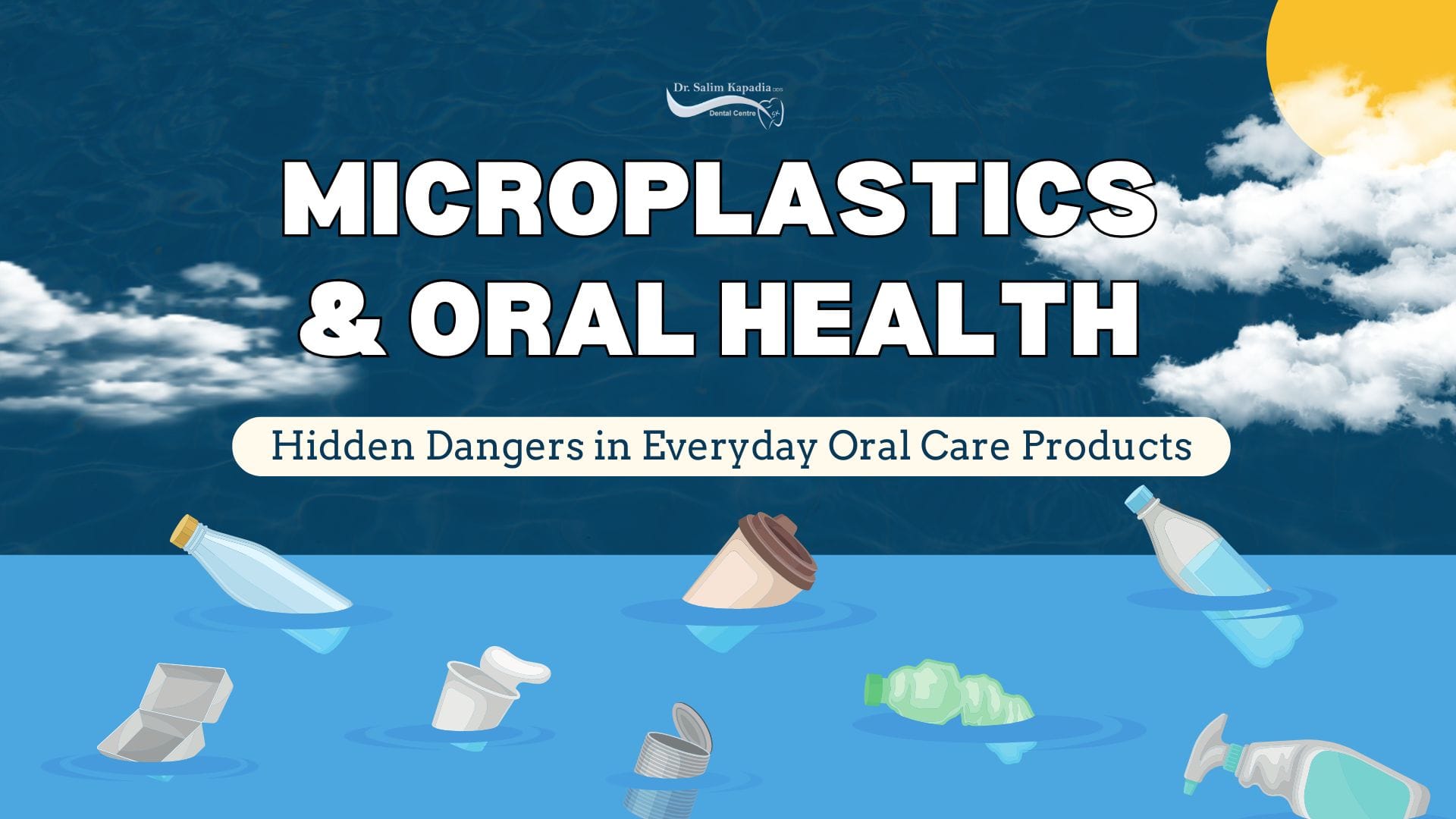
From toothbrush bristles to toothpaste tubes, plastics are embedded in many oral care routines. As these materials break down, they can release microplastics; tiny particles less than five millimetres in size. Emerging research suggests that microplastics may harm ecosystems and human health. What does this mean for your mouth?
Where Microplastics Come From
- Toothpaste and exfoliating additives: Some whitening pastes once used polyethylene beads for “scrub” action. These beads don’t dissolve and can become microplastics in water systems.
- Floss and interdental sticks: Many flosses are made of nylon or Teflon. When they shred, small fibres can remain between teeth or be swallowed.
- Mouthwash and personal care products: Plastics in packaging can leach particles into the liquid over time, especially if exposed to heat.
- Dental procedures: Polishing pastes or impression materials may produce fine plastic debris, although clinics manage waste to minimize exposure.
Potential Effects on Oral and Overall Health
Microplastic particles have several potential effects on oral and overall health. They can irritate gum tissue if they become lodged between teeth. Some plastics contain additives like phthalates or bisphenol A (BPA), which can leach out and have been linked to hormonal disruption. Additionally, microplastics may alter the oral microbiome, promoting harmful bacteria and biofilm formation. Swallowed particles can travel through the digestive tract, potentially entering the bloodstream and accumulating in organs; the long-term effects of this systemic absorption are still under investigation.
Reducing Microplastic Exposure in Oral Care
- Choose biodegradable toothbrushes: Bamboo handles and plant‑based bristles are compostable alternatives to plastic brushes. Replace them every three months to maintain efficacy.
- Opt for sustainable floss: Silk or plant‑based floss is compostable. Refillable dispensers minimize packaging waste.
- Avoid products with plastic beads: Read ingredient lists and steer clear of polyethylene or polypropylene microbeads.
- Recycle dental products: Many brands offer take‑back programs for toothbrush heads, floss containers and toothpaste tubes.
- Support eco‑friendly clinics: Choose dental practices that minimize single‑use plastics and properly handle waste.
- Stay informed: As research evolves, new guidelines may emerge. Check reputable sources and ask your dentist about safer product choices.
By making conscious choices, you can reduce your exposure to microplastics while still maintaining excellent oral hygiene. Dr. Salim Kapadia Dental Centre is committed to sustainable practices and can help you select eco‑friendly dental products that protect both your mouth and the environment. Book an appointment here.