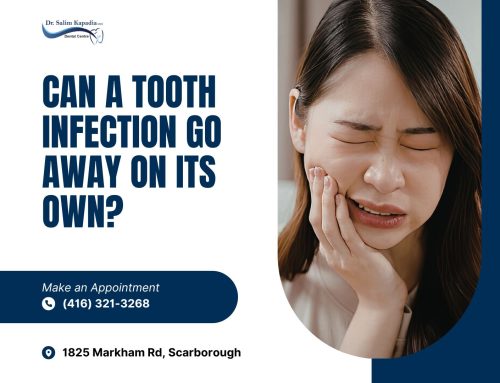


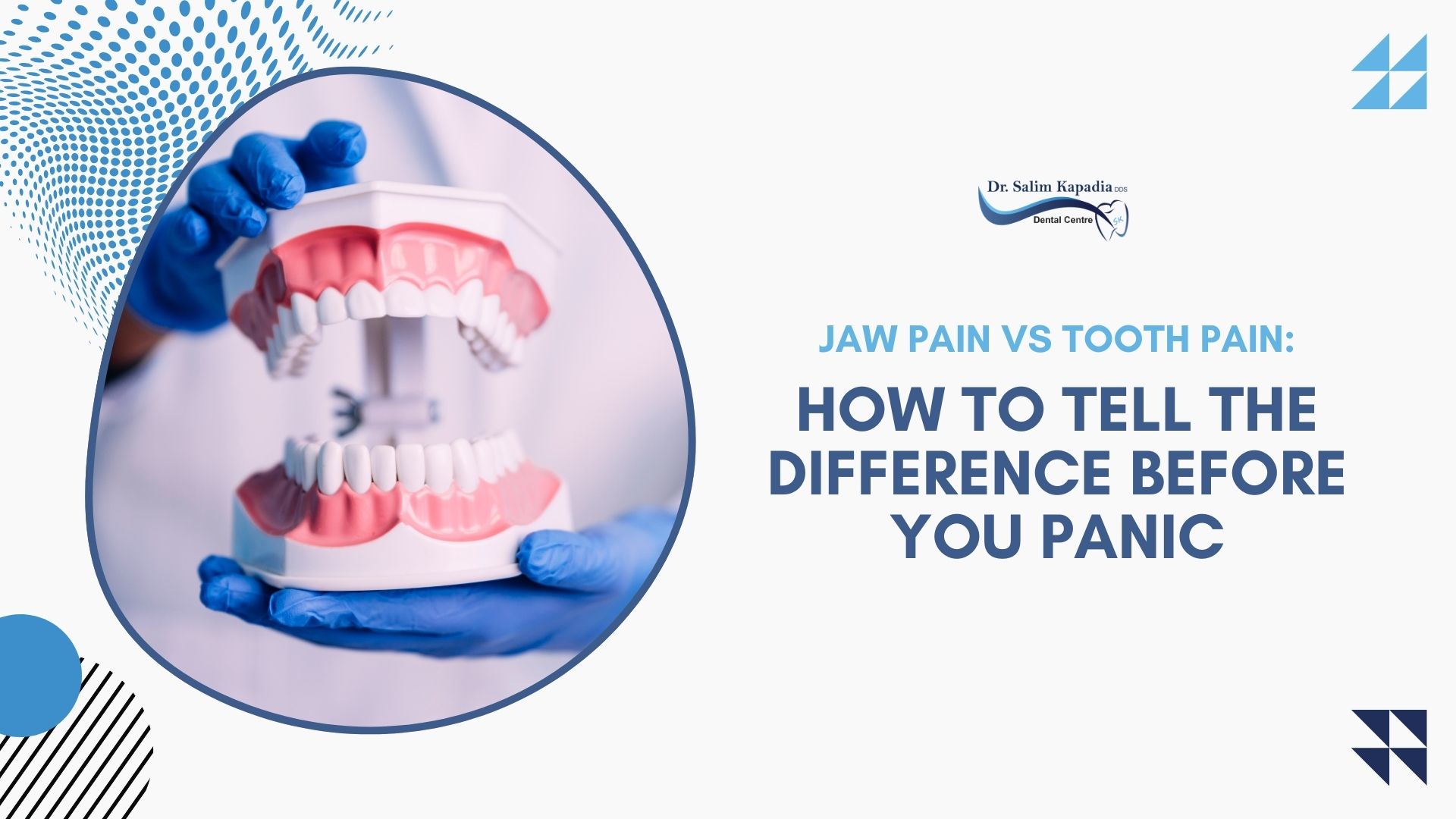
Pain around your teeth or jaw can start as a mild ache and quickly make you worry. Jaw pain and tooth pain often feel similar because the nerves and muscles in this area are closely linked.
Why jaw pain can feel like tooth pain
Your temporomandibular joint (TMJ), jaw muscles, and nearby teeth share nerve connections. Irritation in one area can feel like pain in another, so jaw issues can mimic a dental problem. Understanding the pattern of pain helps you decide what to do next.
Signs it’s more likely tooth pain
Tooth pain usually centres on one specific tooth or area. It often feels sharp, throbbing, or sensitive. Common signs include sensitivity to hot, cold, or sweet foods that lingers, pain when biting or chewing on one side, constant throbbing that spreads to the jaw or ear, gum swelling, a bad taste, or pain that wakes you at night. These symptoms often come from cavities, cracked teeth, deep decay reaching the nerve, or dental infections.
Signs it’s more likely jaw pain
Jaw pain feels more spread out and is closely tied to movement. You might feel tenderness in the jaw joint or cheek muscles, hear clicking or popping when opening your mouth, notice pain when chewing or yawning, experience stiffness or locking, or feel aching near the ear, temples, or side of the head. Jaw pain is often linked to clenching, grinding, posture issues, or TMJ disorders.
Simple checks you can do at home
You can try a few checks to get a better idea of what’s going on:
- Press gently on the jaw muscles and the area just in front of your ear. If this reproduces the pain, it points more toward a jaw issue.
- Bite down gently on something soft. Sharp pain in one exact spot usually points to a tooth.
- Notice temperature sensitivity. Lingering pain after cold exposure is more commonly tooth-related.
- Pay attention to movement. Pain that gets worse with chewing or opening wide is often jaw-related.
These checks don’t replace a professional exam but can help guide your next step.
What you can do short-term
If it feels like jaw pain: avoid gum and hard foods, use heat or ice as needed, keep your jaw relaxed, and be mindful of stress and posture. A custom night guard may help if you grind or clench at night.
If it feels like tooth pain: avoid chewing on the sore side, rinse with warm salt water, and don’t ignore it. Tooth pain rarely fixes itself.
When to see a dentist right away
You should book an appointment as soon as possible if you have swelling in the gums, face, or jaw, fever or drainage, severe or worsening pain, or difficulty fully opening or closing your mouth. These can be signs of infection or more serious problems that need prompt care.
How a dental exam helps
A proper dental exam separates jaw pain from tooth pain. A dentist checks how individual teeth respond to pressure and temperature, looks for signs of infection or decay, and examines the jaw joint and muscles. X-rays may be used to confirm what’s happening beneath the surface.
If your pain persists or you’re unsure what’s causing it, call (416) 321-3268 to book an appointment at Dr. Salim Kapadia Dental Centre in Scarborough. Our team will assess your symptoms and advise you on the appropriate next steps.