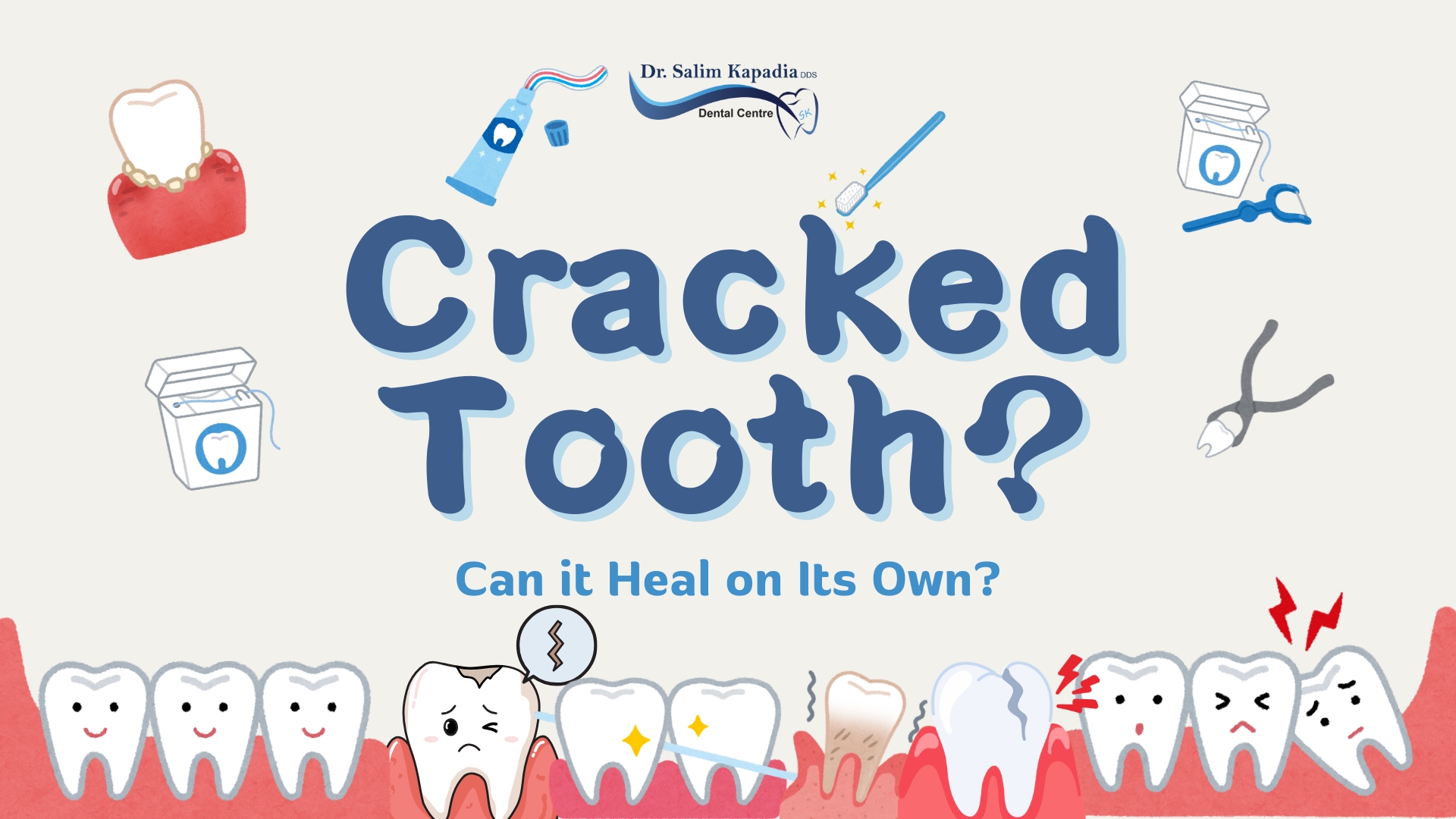

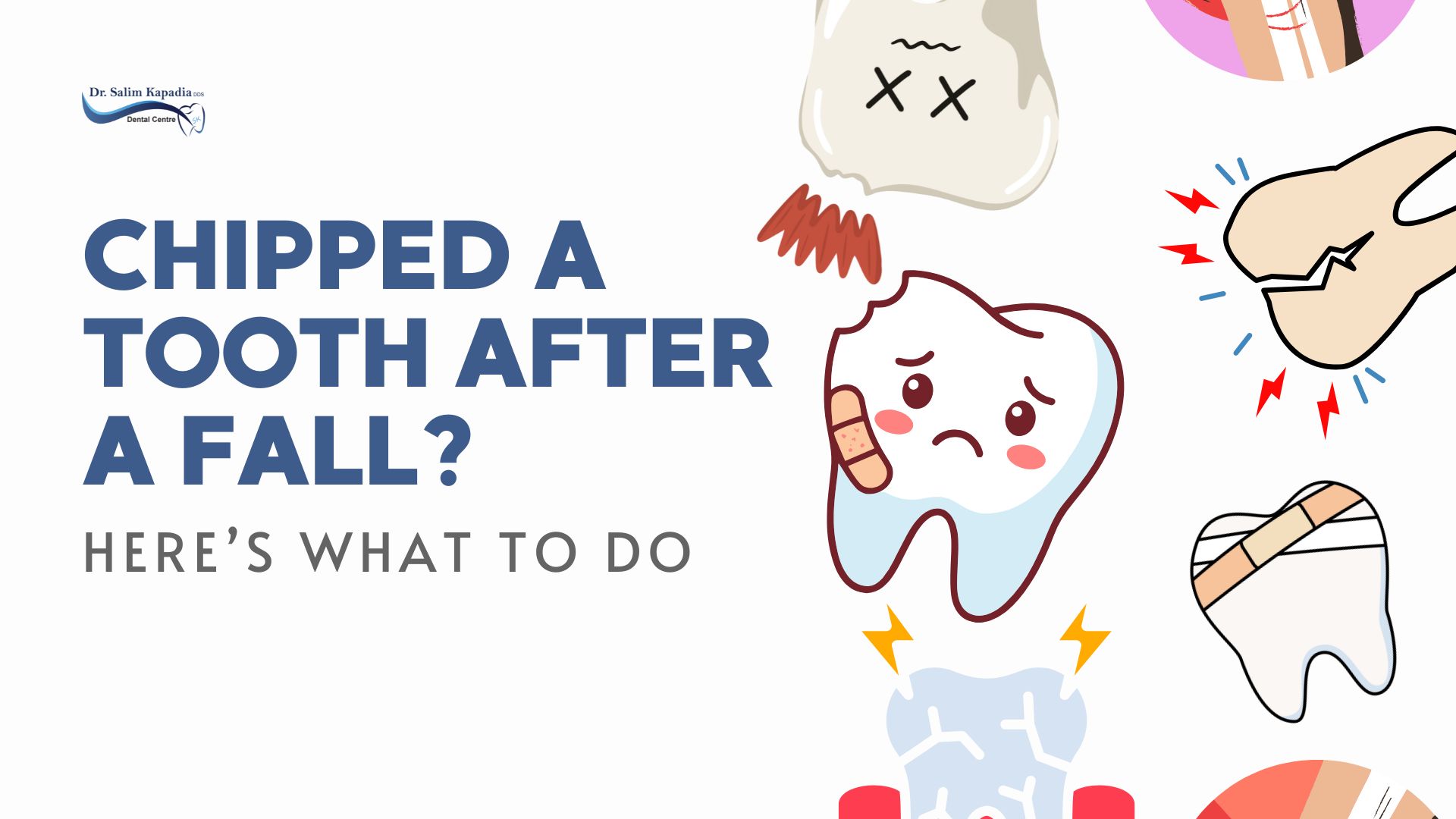
A fall can damage a tooth even if there is no obvious injury to the face. Teeth are rigid and do not absorb impact well, so a sudden force can chip or fracture enamel. Some chips are minor, while others weaken the tooth and require treatment. Acting early helps protect the tooth and reduce the risk of further damage.
What to Do Immediately After the Injury
Start by gently rinsing your mouth with clean water to remove debris. If there is bleeding, apply light pressure with gauze. Avoid biting or chewing on the affected side, and stay away from hard or crunchy foods. If the chipped piece of tooth can be found, keep it clean and bring it with you to your dental visit.
If the edge of the tooth feels sharp, temporary dental wax or sugar-free gum can be used to protect your tongue and cheek. Over-the-counter pain relief may help if needed, but avoid placing medication directly on the tooth or gums.
When a Chipped Tooth Needs Dental Care
A dental assessment is recommended even if the chip looks small. Damage is not always visible, and small fractures can spread over time. Prompt care is especially important if you notice:
- Pain when biting or chewing
- Sensitivity to cold or air that lingers
- A visible crack extending toward the gum
- Swelling, bleeding, or signs of infection
- Rough or sharp edges causing irritation
Treatment depends on the severity of the chip. Minor enamel damage may only need smoothing or bonding, while deeper fractures may require a crown or other restorative care to protect the tooth.
Falls are common, but dental complications do not have to be. Early evaluation helps preserve the tooth and prevents avoidable treatment later. If you have chipped a tooth from a fall, contact Dr. Salim Kapadia Dental Centre. Call (416) 321-3268 or book an appointment online at https://drsalimkapadiadental.com/online-appointments/