

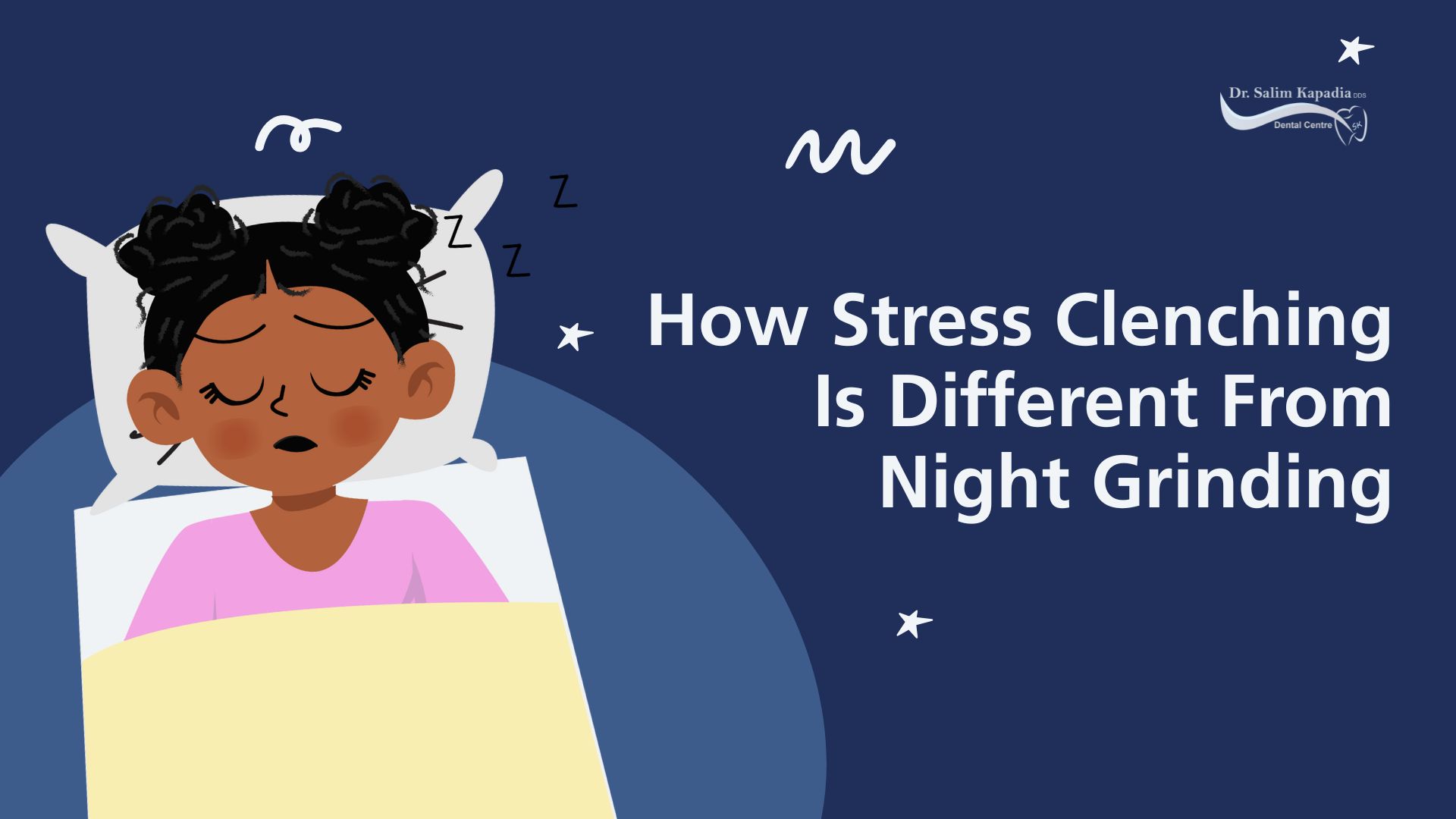
Clenching and grinding are often lumped together, but they are not the same problem. They happen at different times, feel different, and damage teeth in different ways. Knowing which one you are dealing with matters.
Stress clenching happens when you are awake
Clenching usually happens during the day. It is tied to stress, focus, or tension, not sleep.
People who clench often notice:
- Tight jaw or facial muscles
- A dull ache in the jaw, temples, or neck
- Headaches that build through the day
- Teeth touching even when not chewing
Clenching is more about sustained pressure than movement. Teeth are held together for long periods, which overloads muscles and jaw joints.
Night grinding happens while you sleep
Grinding happens unconsciously, usually during sleep. It involves movement, not just pressure.
People who grind often have:
- Worn, flattened, or chipped teeth
- Morning jaw soreness
- Tooth sensitivity with no obvious cavity
- Damage that seems to appear “out of nowhere”
Grinding puts repeated sideways forces on teeth, which increases cracking, fractures, and restoration failure.
Why clenching feels worse but grinding causes more damage
Clenching often feels more painful because muscles are constantly tense. Grinding may go unnoticed because it happens during sleep.
Grinding, however, is usually more destructive. The sliding motion wears enamel, breaks fillings, and stresses crowns and veneers.
The fixes are not identical
Clenching improves with awareness and habit changes. Stress management, posture, and learning to keep teeth slightly apart during the day all help.
Grinding almost always requires physical protection. A night guard reduces damage even if the habit continues.
What to do next
If you are dealing with jaw pain, headaches, worn teeth, or unexplained dental damage, guessing is a mistake. Clenching and grinding look similar but require different solutions, and treating the wrong one lets damage continue.
Dr. Salim Kapadia Dental Centre assesses bite patterns, muscle strain, and tooth wear to identify whether clenching, grinding, or both are involved. From awareness strategies to properly fitted night guards, the goal is to stop damage before it becomes permanent. Book an exam to get clarity and protect your teeth before stress does more harm than you realise.