

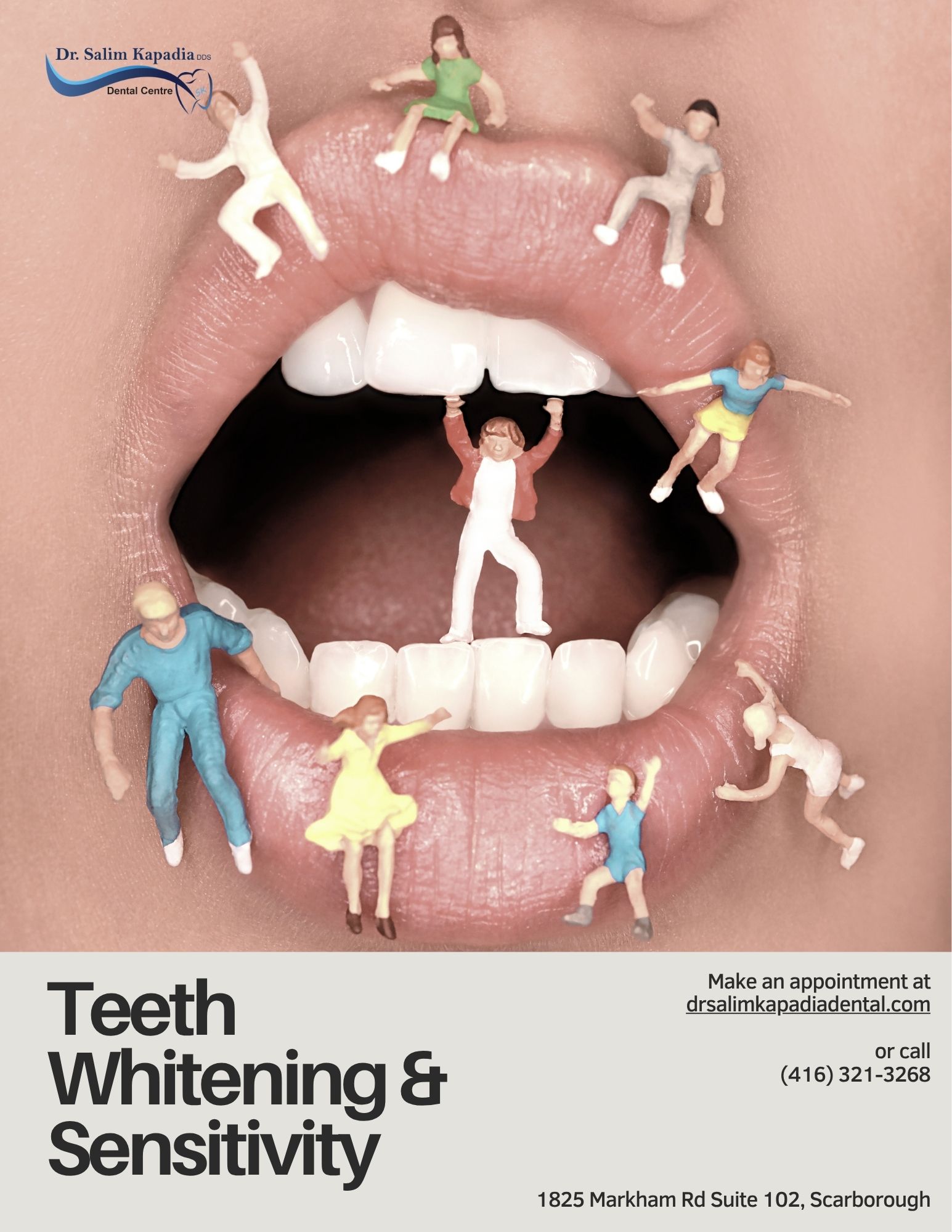
Teeth whitening can noticeably brighten your smile, but it’s not uncommon to experience sensitivity afterward. For some, it shows up as a sharp response to cold drinks. For others, even breathing in cool air can feel uncomfortable. While this reaction can be concerning, it is usually temporary and manageable.
What causes sensitivity after whitening?
To understand this, it helps to know how whitening works. Most treatments use peroxide-based agents that penetrate the enamel to break down stains. During this process, the inner layer of the tooth can become temporarily more exposed, which is what leads to sensitivity.
Common reasons include:
- Enamel dehydration during treatment
- Temporary exposure of dentin (the sensitive inner layer)
- Higher concentration of whitening agents
- Pre-existing tooth sensitivity or enamel wear
In most cases, this sensitivity fades within a few days as the teeth naturally rehydrate and recover.
When is it more noticeable?
Not everyone experiences sensitivity the same way. It tends to be more noticeable if:
- Whitening treatments are done frequently
- There are existing issues like gum recession or enamel erosion
- Very strong whitening products are used without supervision
These factors can make the teeth more reactive during and after the procedure.
How to manage sensitivity
The discomfort is usually short-lived, but a few simple steps can help reduce it:
- Use toothpaste designed for sensitive teeth
- Avoid extremely hot or cold foods for a few days
- Take a short break between whitening sessions
- Use a soft-bristled toothbrush to prevent further irritation
If sensitivity persists longer than expected, it may indicate an underlying issue that needs attention.
Can it be prevented?
While some sensitivity is normal, it can often be minimized. Choosing professionally guided whitening treatments, spacing sessions appropriately, and ensuring your teeth are healthy before starting can all make a difference.
Sensitivity after whitening is typically a temporary side effect rather than a sign of damage. Understanding why it happens makes it easier to manage and prevent in future treatments.
If the discomfort feels intense or doesn’t improve within a few days, a dental evaluation can help determine the cause and ensure there are no underlying concerns. Schedule a visit with Dr. Salim Kapadia Dental Centre in Scarborough for a detailed evaluation and guidance on safe, effective whitening care.