


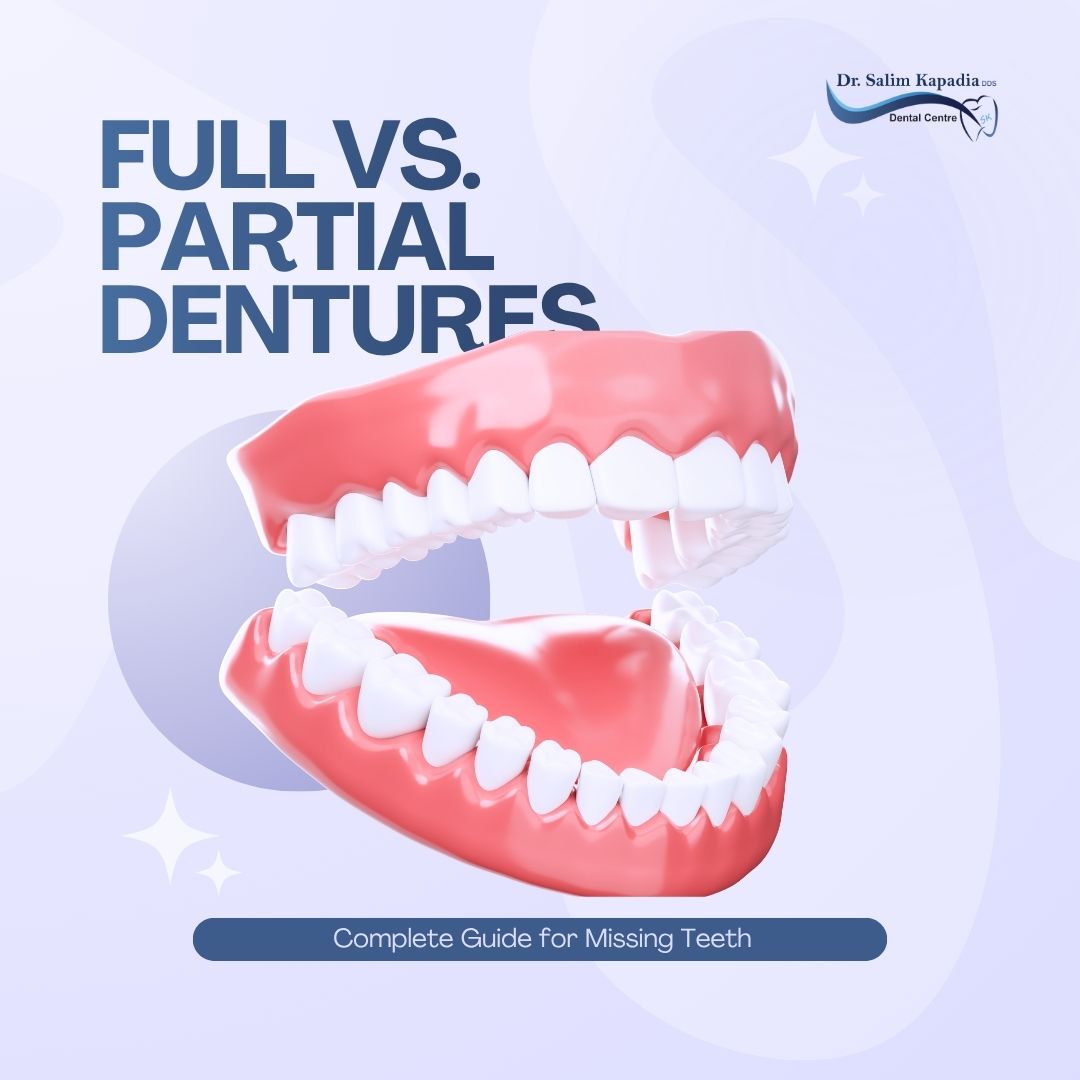
Missing teeth affect more than your smile. Chewing becomes difficult, speech may change, and remaining teeth can shift out of position over time. Dentures offer a practical solution for restoring function and confidence, but choosing between full and partial options depends on how many teeth you’ve lost and your oral health condition.
Understanding Full and Partial Dentures
The main difference between full and partial dentures lies in how many teeth are being replaced and how the appliance is supported in your mouth. Full dentures replace all teeth in an arch (upper, lower, or both). They are removable and rest directly on the gums, held in place by suction or adhesive. Complete dentures are recommended when all teeth in an arch are missing or need extraction due to severe decay, gum disease, or damage.
Conventional complete dentures are made after teeth have been removed and the gum tissue has begun to heal. Your dentist takes impressions to create a model of your mouth, which is used to custom-make dentures that fit comfortably and match your facial features.
Partial dentures are used when one or more natural teeth remain in place. They consist of replacement teeth attached to a gum-colored base and fill the gaps left by missing teeth. Partials attach to existing teeth using metal clasps or precision attachments, which prevents surrounding teeth from shifting into empty spaces. Because they anchor to natural teeth, partial dentures tend to be more stable than full dentures.
At Dr. Salim Kapadia Dental Centre, several denture options are available to suit different needs. Provisional flipper dentures are temporary appliances used while permanent dentures are being made – they’re lightweight and easy to use. Acrylic dentures are made from durable acrylic material, are affordable, and can be easily adjusted. Cast partial dentures have a metal framework, making them stronger and more stable than acrylic options.
The Denture Treatment Process
Getting dentures involves several steps to ensure comfort, proper fit, and natural appearance. The process starts with a comprehensive dental examination of your oral health, including your gums and any remaining teeth. If full dentures are needed, tooth extractions might be performed before the denture process begins.
Once your mouth is prepared, detailed impressions of your jaw and gum ridges are taken. A dental laboratory uses these impressions to create a custom prosthetic that complements your facial features and bite alignment. You’ll attend one or more try-in appointments where a wax model is tested for comfort, bite alignment, and appearance before the final denture is fabricated.
After your dentures are placed, follow-up visits allow for adjustments as your mouth adapts to the new appliance. Sore spots are common during the first few weeks and can be relieved through simple adjustments. Having a dental clinic nearby makes it easier to access these timely adjustments and ongoing maintenance, which is essential for preserving gum health and ensuring long-term comfort.
Care and Long-Term Maintenance
Proper care extends denture life and protects your oral health. Remove and rinse dentures after eating to remove food particles and debris. Brush dentures daily with a soft denture brush and non-abrasive cleaner to prevent staining and bacterial buildup. Soak dentures overnight in water or a denture solution to maintain their shape and keep them moist.
Clean your gums, tongue, and palate every morning before inserting your dentures. This stimulates circulation and removes bacteria. Visit your dentist regularly for oral examinations and denture adjustments. For partial dentures, your dentist will also monitor the health of your remaining teeth to ensure the supporting structures stay strong and decay-free.
Most dentures need replacement or relining every 5 to 7 years due to natural jawbone changes. Over time, your jawbone shrinks without tooth roots, causing dentures to become loose. Regular checkups help reduce the sunken facial appearance that can develop when dentures no longer fit properly.
The adjustment period after receiving dentures typically takes several weeks. Your muscles must adapt to new patterns of chewing and speaking. Start with softer foods initially and follow a gradual breaking-in schedule provided by your dentist. Most discomfort resolves within the first month as your mouth adapts.
For personalized denture consultations in Scarborough, contact Dr. Salim Kapadia Dental Centre. Call (416) 321-3268 or book an appointment online at https://drsalimkapadiadental.com/online-appointments/